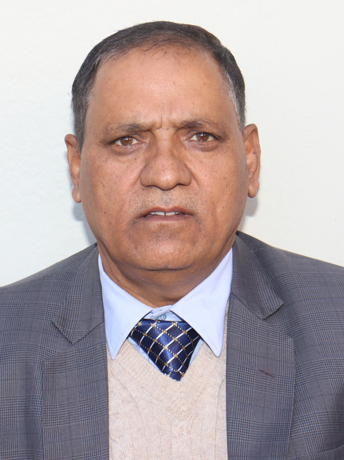

Madhu Krishna Shrestha
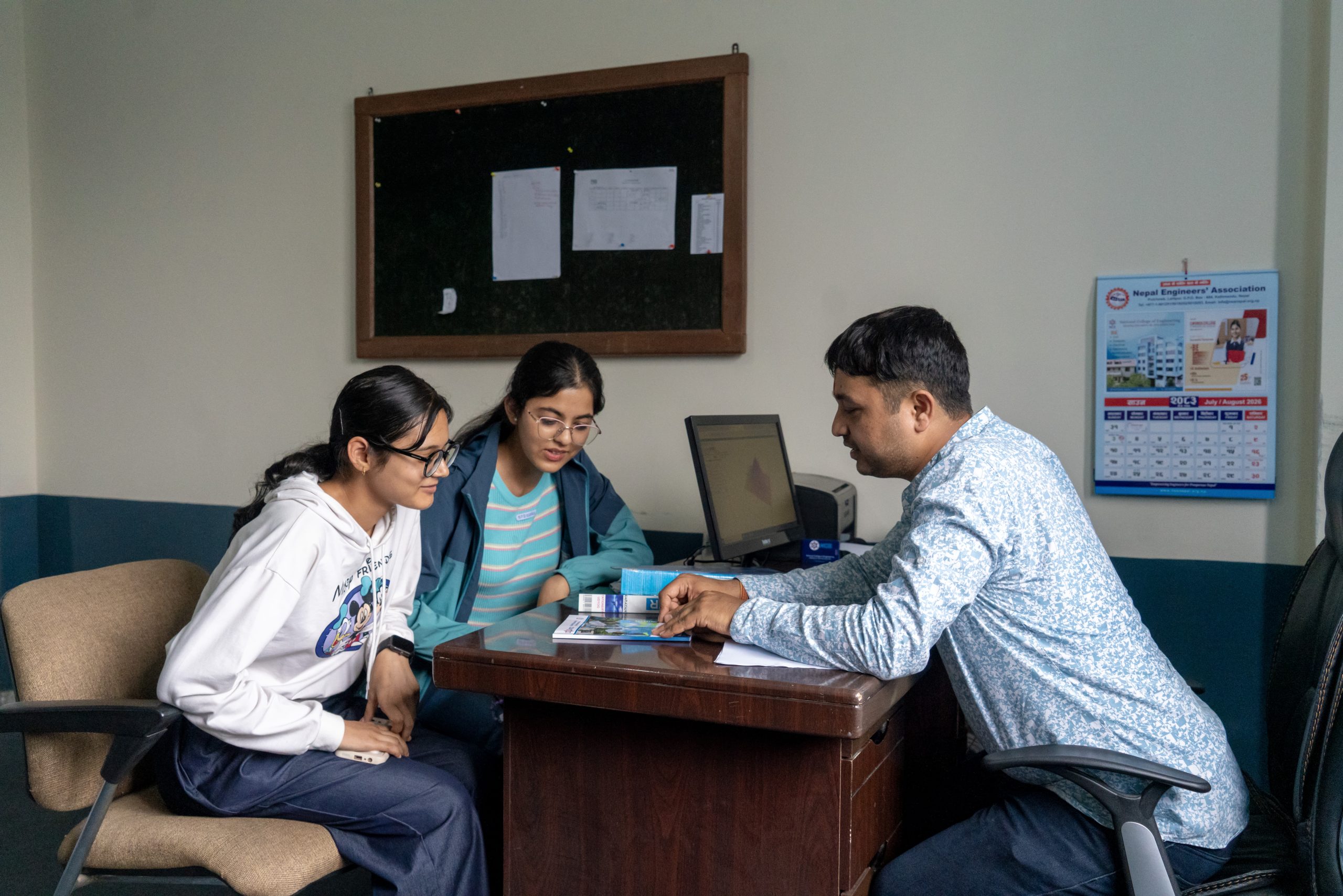
Welcome to the Department of Applied Sciences. It gives me immense pleasure to introduce you to the Department of Applied Sciences, which is focused on inculcating basic knowledge in Science, Technology, Engineering and Mathematics (STEM) fields.
Read MoreOverview
The Department Of Applied Science at National College of Engineering (NCE) was established in 2012 AD. The Department Of Applied Science serves as the critical bridge between fundamental scientific theories and practical engineering solutions.The Department of Applied Science is one of the most fundamental and essential departments in this engineering college. The Department of Applied Science plays a foundational and integrative role in an Engineering College by providing strong scientific and mathematical grounding to undergraduate engineering students.
- The Department of Applied Science provides a strong foundation in science and mathematics for engineering students.
- It supports interdisciplinary learning in mathematics, physics, chemistry, and applied sciences.
- The department develops analytical, problem-solving, and research skills.
- It bridges theoretical science with practical engineering applications.
The Department Of Applied Science across NCE are characterized by following well-equipped modern lab facilities.
-
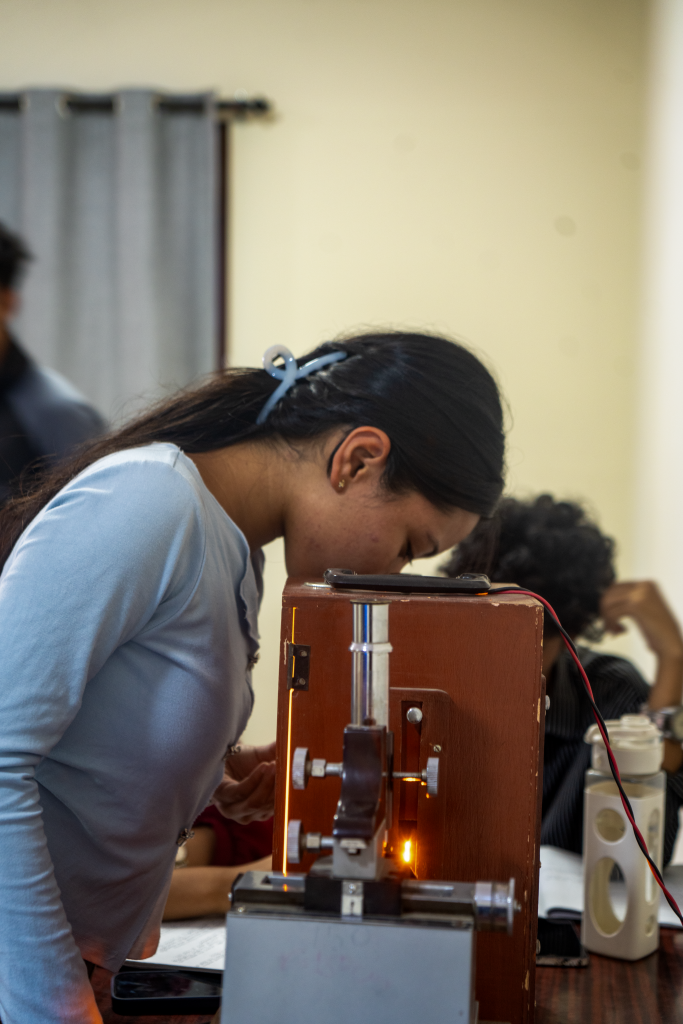
Physics Lab
The Engineering Physics lab is a staple of the first-year experience in almost in this engineering college. While high school physics labs focus on proving basic laws, an engineering physics lab focuses on measurement precision, data analysis, and the properties of materials that make modern technology work.
- Key Equipment: Resonance apparatus, LASER, Lee’s disc apparatus, Newton’s Ring apparatus.
- Experiments: Determination of radius of gyration, modulus of rigidity, thermal conductivity, wavelength of light, capacitance.
-
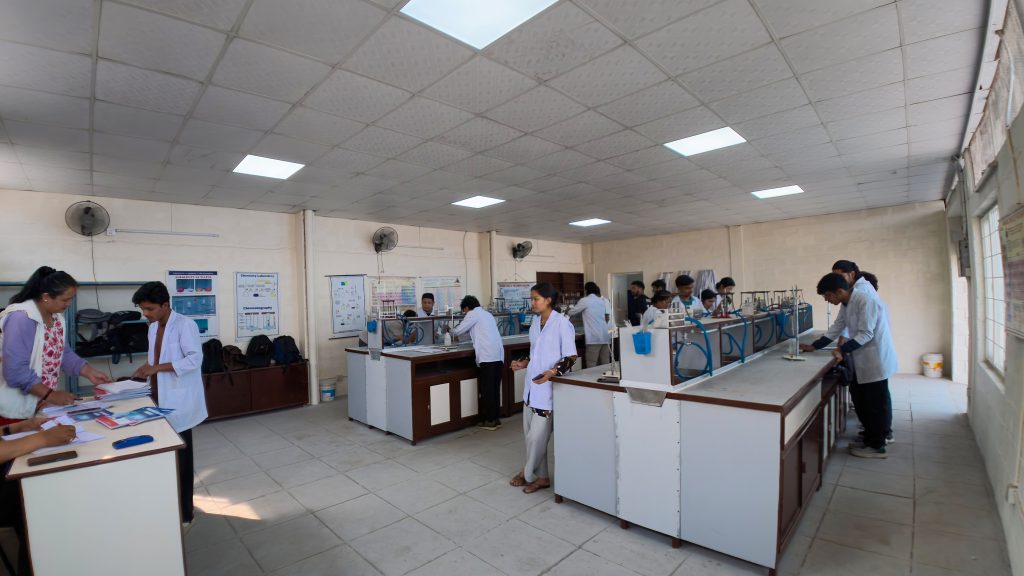
Chemistry Lab
The Engineering Chemistry lab is a core part of the first-year engineering curriculum in most engineering colleges. An engineering chemistry lab emphasizes quantitative analysis, experimental accuracy, and understanding the chemical properties of materials used in engineering applications. Students learn techniques such as titration, solution preparation, and material testing, which help them develop precision, analytical thinking, and an appreciation of how chemical processes influence real-world technologies.
- Key Equipment: Burette, pipette, conical flask, analytical balance, pH meter, conductivity meter, calorimeter, distillation setup.
- Experiments: Determination of strength of acids and bases (titration), preparation of standard solutions, measurement of pH and conductivity of solutions, estimation of hardness of water, determination of calorific value, and analysis of reaction rates and equilibrium, spectrometric analysis.
-
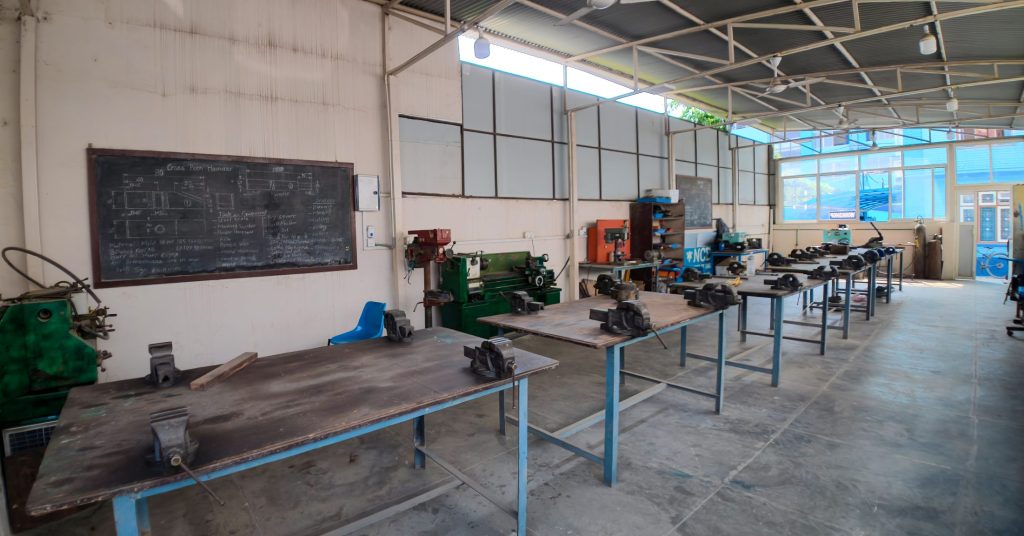
Workshop Lab
The Engineering Workshop lab is an essential part of the first-year engineering curriculum in most engineering colleges. While school-level practical work is usually limited to basic hands-on activities, the engineering workshop focuses on developing fundamental skills in fabrication, machining, and the use of tools and equipment. Students are introduced to different trades such as fitting, carpentry, welding, and sheet metal work, which help them understand how engineering designs are translated into physical components. The workshop emphasizes safety, accuracy, craftsmanship, and practical problem-solving, giving students a strong foundation for real-world engineering practice.
- Key Equipment: Bench work, hacksaw, files, hammer, chisel, screw gauge, micrometer, drilling machine, welding set, machine tools, sheet metal tools, measuring scale, Thread Cutting, forging and casting, brazing and soldering, and safety equipment.
- Experiments: Fitting practice (cutting, filing, drilling, and finishing), machining practice (perform Lathe operations), welding practice (arc welding and gas welding), sheet metal practice (cutting, bending, and riveting), soldering practice and electrical installations.
Teachers helping shape institutional direction.
Assoc. Prof. Dhan Prasad Paudyal
Associate Professor

Er. Kabir Maharjan
Senior Instructor
Mr. Madhu Krishna Shrestha
Head of Department

Mr. Guna Nidhi Lamsal
Associate Professor

Mr. Rajan Nepal
Deputy Head of Department

Mrs. Lasta Maharjan
Associate Professor

Er.Chandrika Nand Adhikari
LecturerRecent News & Notices
- RESULT OF NCE RESEARCH GRANT 2082– LIST OF AWARDEES
- National College of Engineering Conducts Research Grant Proposal Presentations 2082
- Rescheduling of Presentation for NCE Research Grant Proposals 2082
- Orientation Program followed by Renew of MoU between NCE and TODA Coorporation
- पुनःआवेदन फारम(Re-Application Form)भर्ने सम्बन्धमा सूचना