
Er. Kamal Katwal
Message from HOD

Er. Kamal Katwal

It is my great pleasure to welcome you all to the Department of Civil Engineering at National College of Engineering. It is a unique experience to be at the helm of affairs of this great department.

Read More
Campus life extends beyond lectures into events, tours, and community.
See Campus Life >
Click Here
Previous slide
Next slide
25+ Years of Excellence
4 Programs & Departments
3000+ Students Enrolled
Overview

Established in 2009 AD, the Department of Civil Engineering at the National College of Engineering (NCE) offers a Bachelor of Civil Engineering program with an annual intake capacity of 96 students, the largest among all academic programs at the college. Through a balanced blend of academic excellence, practical training, field visits, and hands-on learning, the department prepares competent and innovative engineers equipped to address contemporary infrastructure challenges and contribute to national development.
National College of Engineering Civil Department Overview
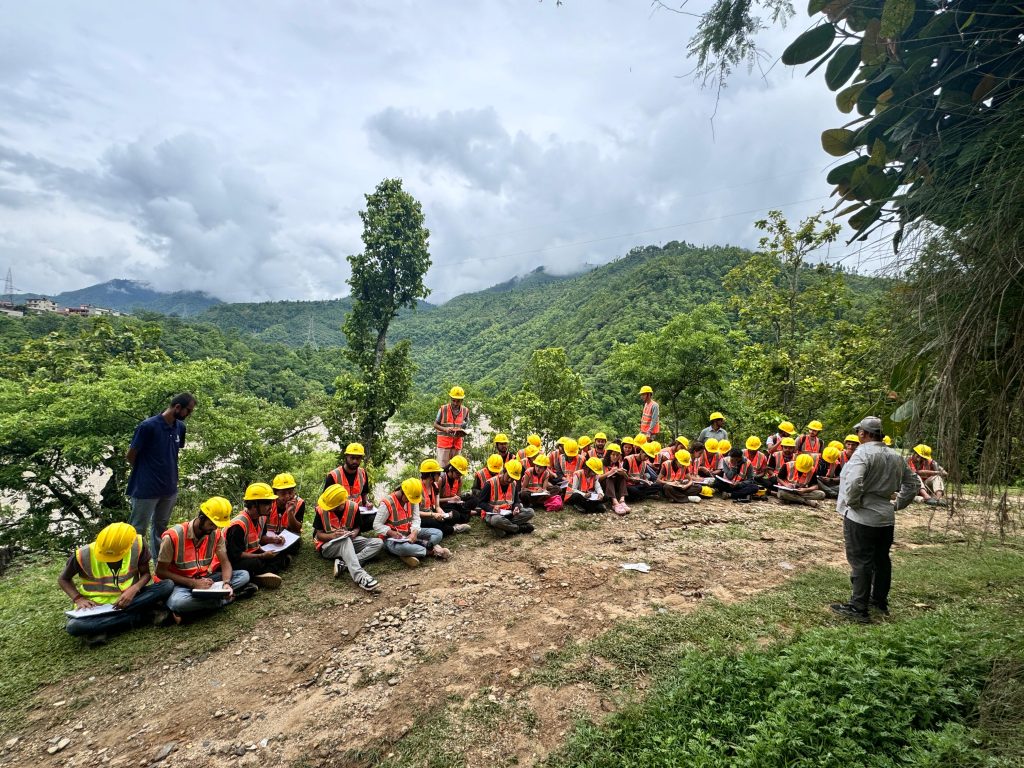
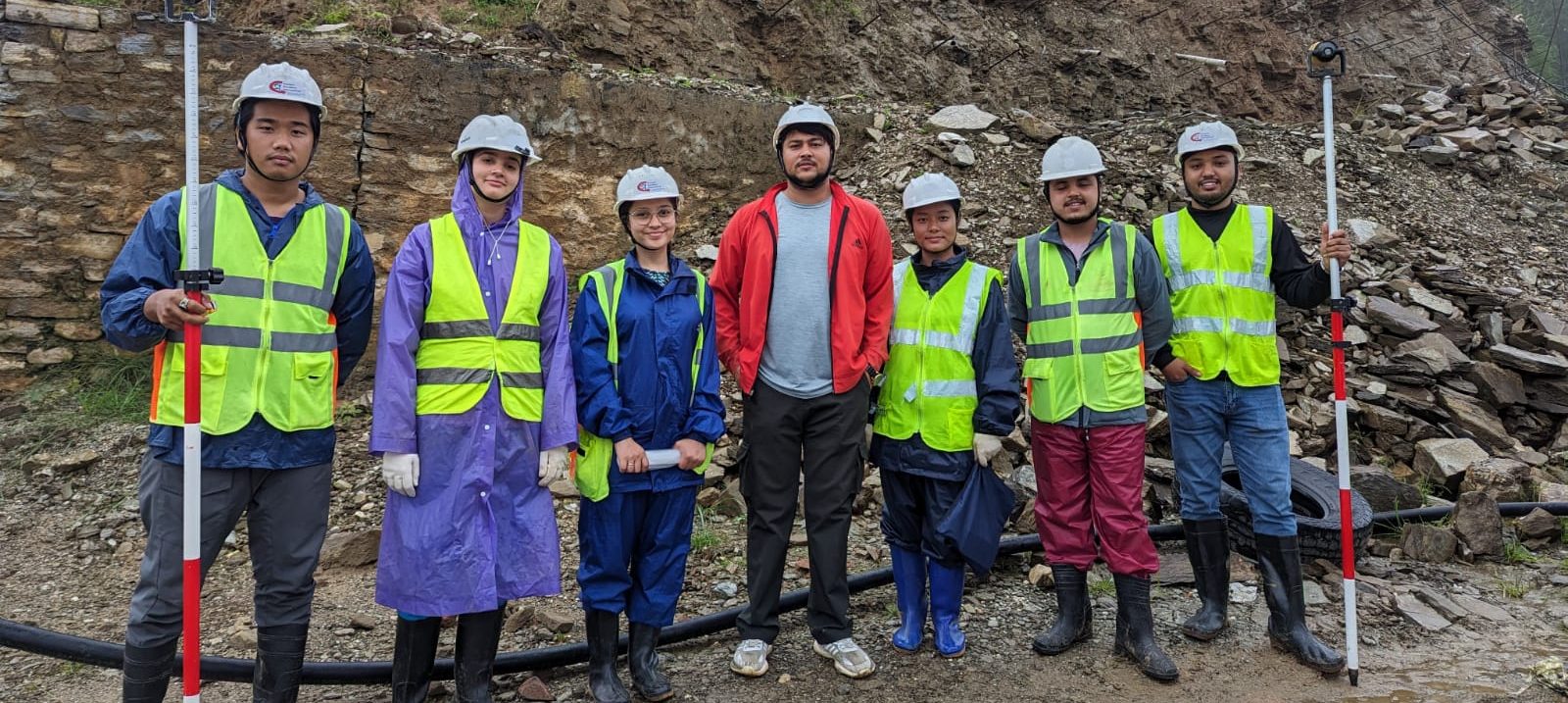
  • Real-world Learning: Mandatory site visits, and off-site survey camps
  • Expert Faculty: Approachable, industry-tested educators who bring real-world
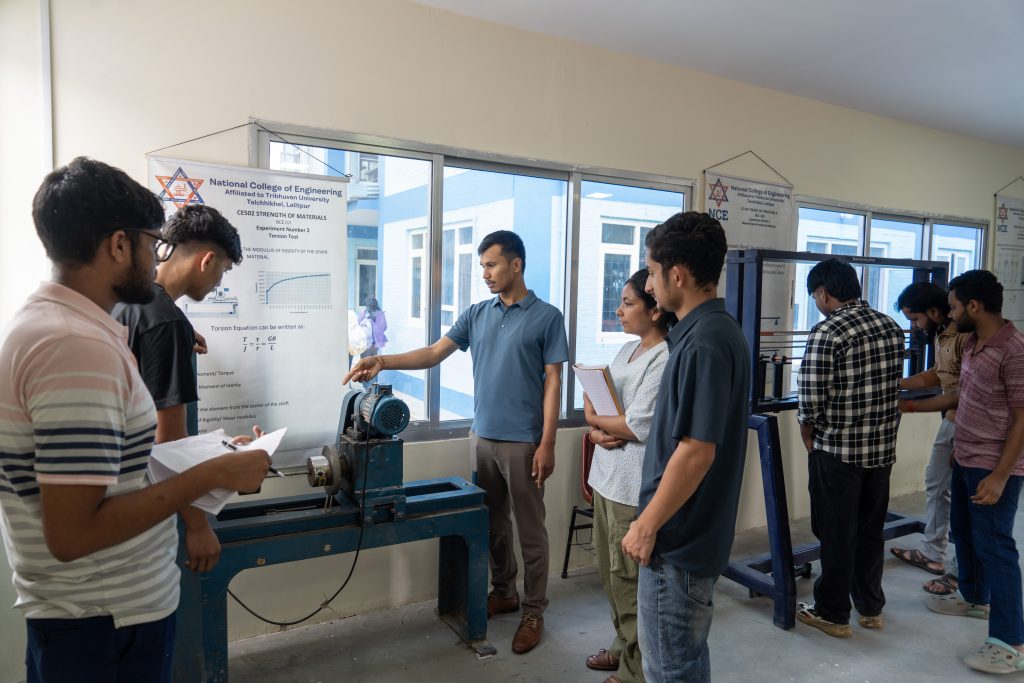
  • Advanced Facilities: Hands-on experience in heavily equipped, modern laboratories
  • Software Mastery: Master professionally recognized software including AutoCAD, ETABS, SAP2000 and GIS.
Laboratories

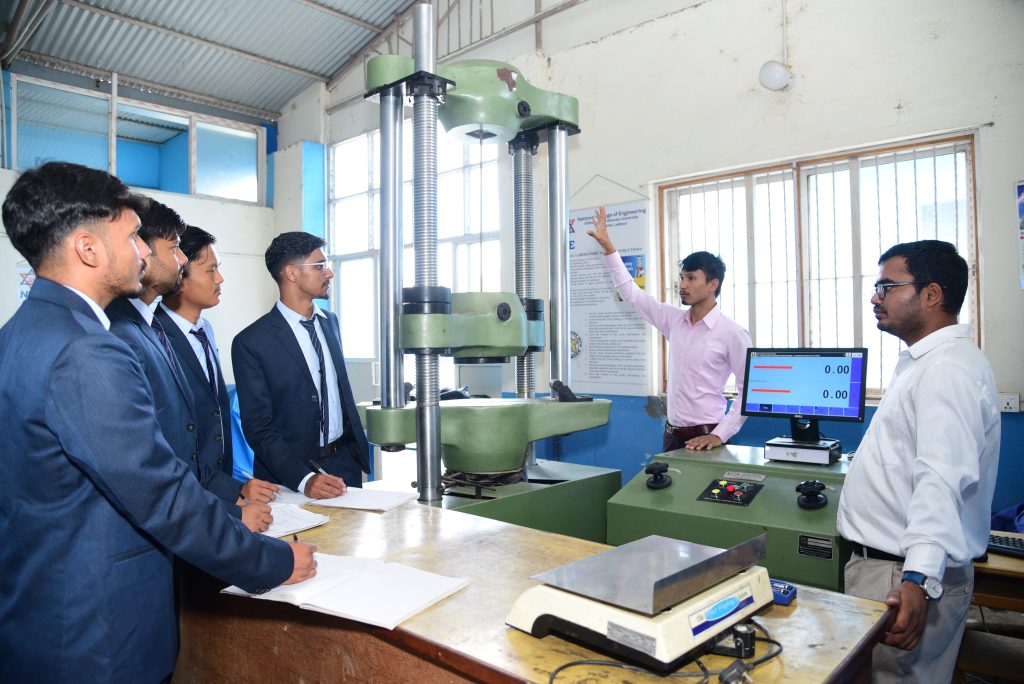
Material Testing Lab
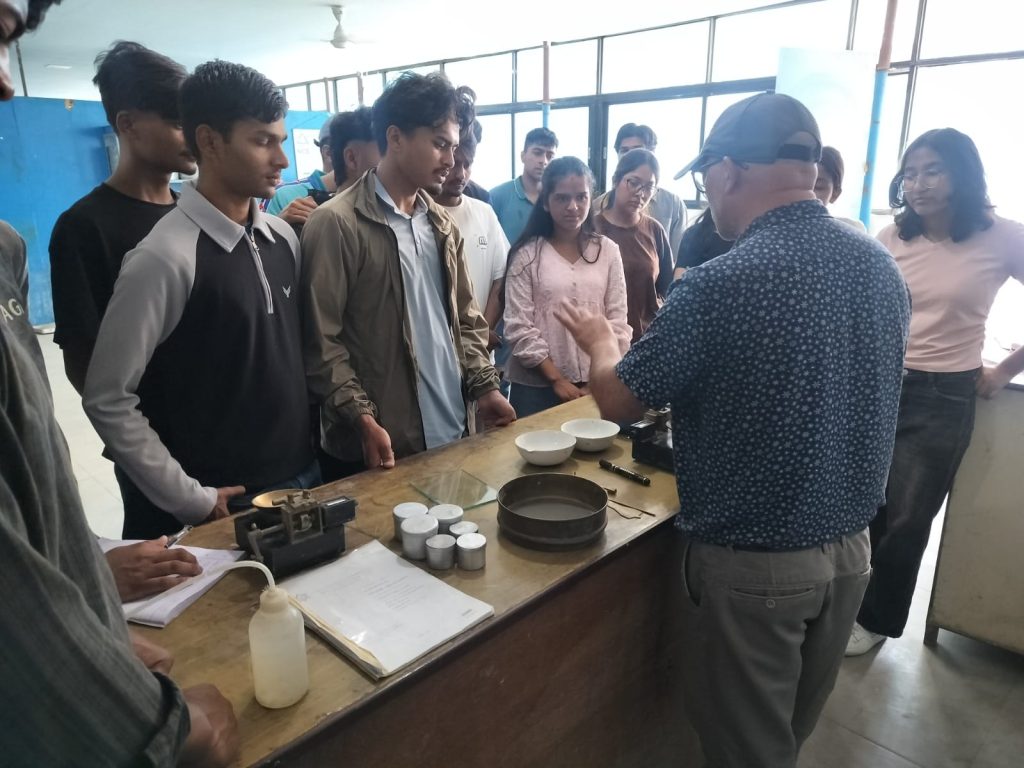
1. Material Testing Lab
  • Purpose: Tests construction material quality, strength, and durability against engineering standards.
  • Subjects: Civil Engineering Materials, Concrete Technology, Design of RCC Structures.
  • Key Equipment: Universal/Compression Testing Machines, Vicat apparatus, Le Chatelier apparatus, Non-Destructive Testing (NDT) devices.
  • Core Experiments: Testing bricks, stones, cement, and steel; concrete mix design, workability, and strength testing; NDT (rebound hammer/ultrasonic pulse).
   
2. Strength of Materials Lab
  • Purpose: Observes material behavior and structural mechanics under various loading conditions.
  • Subjects: Strength of Materials.
  • Key Equipment: Universal Testing Machine (UTM), Torsion Testing Machine, Column Buckling and Beam setups.
  • Core Experiments: Tensile testing (steel, timber), stress-strain curves, bending, torsion, and column buckling tests.
 
Structural Engineering Lab
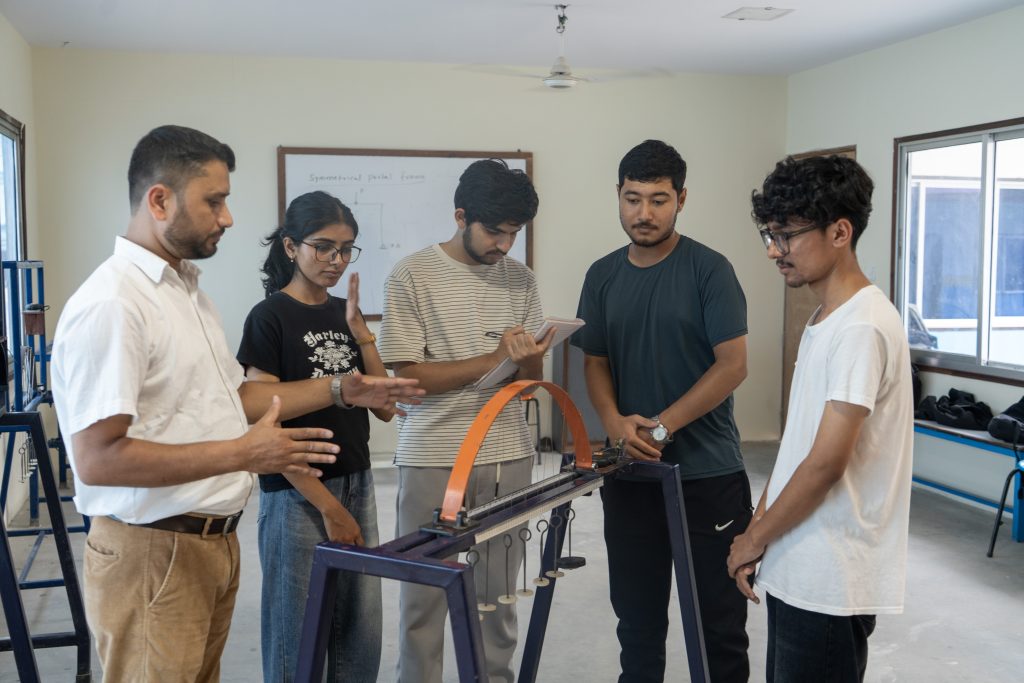
3. Structural Engineering Lab
  • Purpose: Analyzes the behavior of structural frameworks and verifies design principles.
  • Subjects: Theory of Structures I & II.
  • Key Equipment: Symmetrical/unsymmetrical frameworks, truss, suspension cable, and two/three-hinged arch setups.
  • Core Experiments: Beam and frame deflection, truss and bridge analysis, influence line plotting, and structural diagram preparation (SFD, BMD, AFD).
Engineering Geology Lab
4. Engineering Geology Lab
  • Purpose: Evaluates geological conditions affecting project feasibility, design, and safety.
  • Subjects: Engineering Geology I & II.
  • Key Equipment: Rock/mineral samples, topographic and geological maps.
  • Core Experiments: Mineral/rock identification, mapping, cross-sections, dip analysis, and borehole data interpretation.
Water Resources and Hydraulics Lab
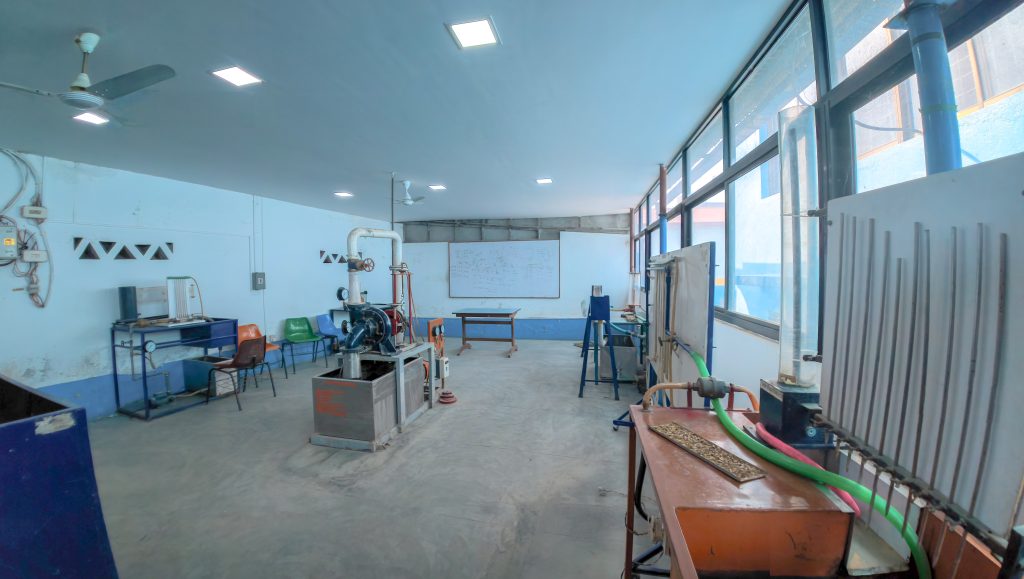
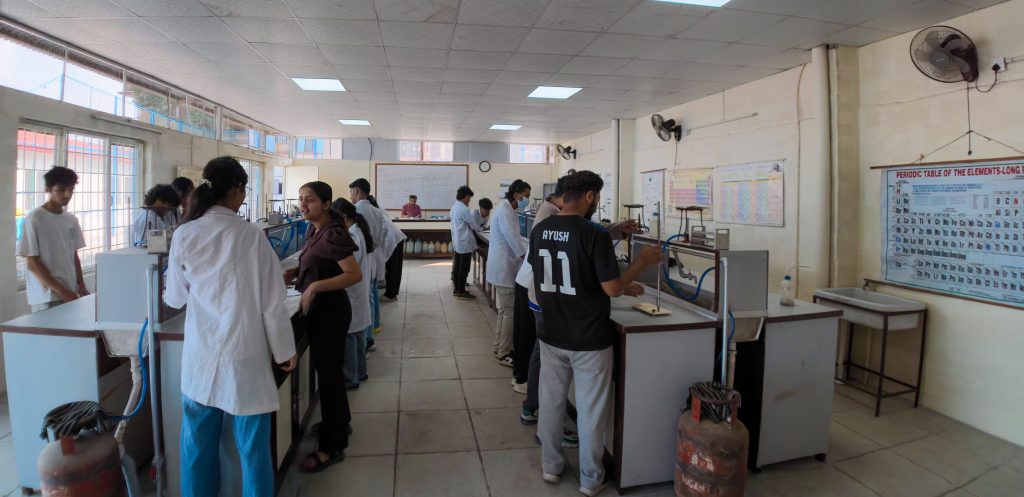
5. Water Resources and Hydraulics Lab
  • Purpose: Studies fluid behavior and flow principles for water supply, irrigation, and hydropower design.
  • Subjects: Fluid Mechanics, Hydraulics, Hydropower.
  • Key Equipment: Venturi/Orifice meters, Reynolds apparatus, open channel flow setup, Francis and Pelton turbines.
  • Core Experiments: Viscosity testing, Bernoulli’s theorem verification, pipe head loss, hydraulic jumps, and turbine efficiency.
6. Geotechnical and Transportation Engineering Lab
  • Purpose: Examines soil properties and pavement materials for foundation and highway design.
  • Subjects: Soil Mechanics, Transportation Engineering I & II.
  • Key Equipment: Proctor compaction, Direct/Triaxial shear machines, CBR machine, Los Angeles Abrasion (LAA) machine, Marshall Stability tester.
  • Core Experiments: Soil classification, compaction, permeability, and shear strength tests; aggregate and bitumen properties, Marshall mix design, and traffic studies.
7. Chemistry and Environmental Engineering Lab
  • Purpose: Assesses water and wastewater quality to design sustainable sanitation and treatment systems.
  • Subjects: Water Supply Engineering, Sanitary Engineering.
  • Key Equipment: pH/DO/Turbidity meters, Jar test machine, Spectrophotometer.
  • Core Experiments: Physical, chemical, and biological water quality testing; coagulant dosing, BOD/COD tests, and sludge analysis.
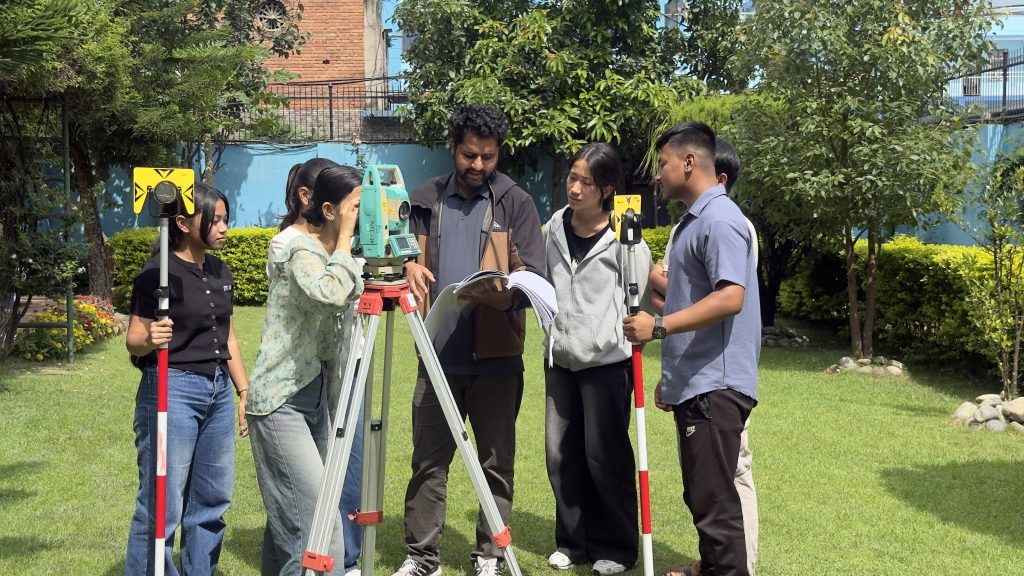
8. Survey Engineering Lab
  • Purpose: Teaches traditional and modern mapping techniques for project layout and alignment.
  • Subjects: Engineering Survey I & II.
  • Key Equipment: Total Station, Theodolite, Auto Level, Hand GPS, DGPS, Drones.
  • Core Experiments: Levelling, traversing, total station and drone mapping, contouring, curve setting out, and GIS applications.

Faculties

Teachers helping shape institutional direction.

Student’s club

Civil Engineering Students’ Society (CESS)

The Civil Engineering Students’ Society (CESS) serves as the official student-led wing of the department. It drives peer-to-peer learning, develops soft skills, and connects students directly with industry professionals.

Key Initiatives & Events:
  • Technical Exhibitions: Hosting annual engineering model displays and project demonstrations for the public.
  • Professional Development: Organizing specialized software bootcamps, technical workshops, and expert guest lectures.
  • Competitive Events: Coordinating inter-college engineering competitions, structural design contests, and technical quizzes.
  • Academic Forums: Facilitating research paper presentations and panel discussions on current infrastructure trends.